


The big Reddit reveal on interview red flags!


Interview red flags include oversharing unnecessary information, talking about irrelevant skills, blaming others for past mistakes, and showing a “victim mentality.” Other red flags are lack of research, not providing straightforward answers, showing an “I don’t care” attitude, excessive self-praise, and poor listening skills.
From over-sharers to the 'never-my-fault' folks, the variety is endless.
A recent discussion on Reddit(opens in a new tab) brought these pet peeves into the spotlight, with recruiters sharing their biggest interview turn-offs.
Let’s go through some of these candid revelations.
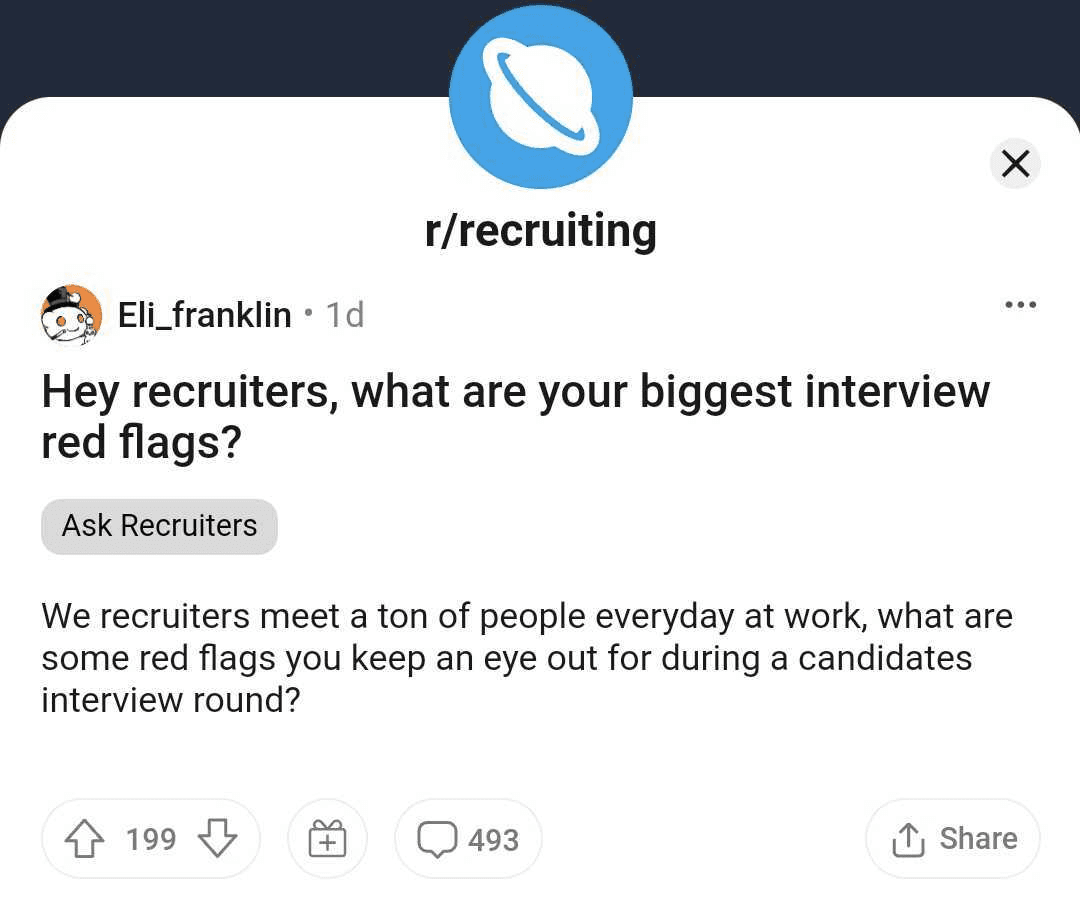
1. Giving out too much of unnecessary information
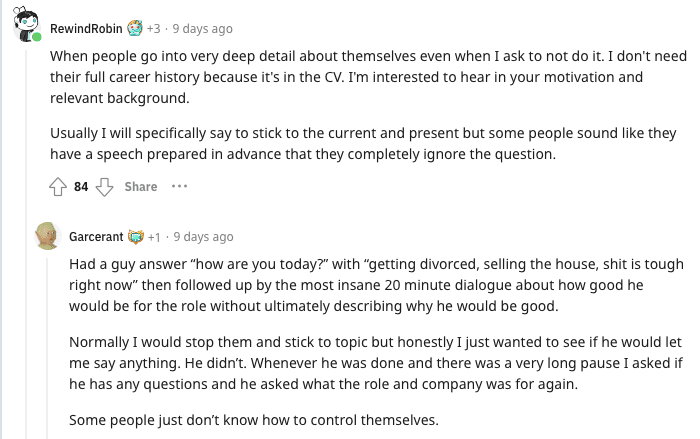
2. Going through history no one wants to hear
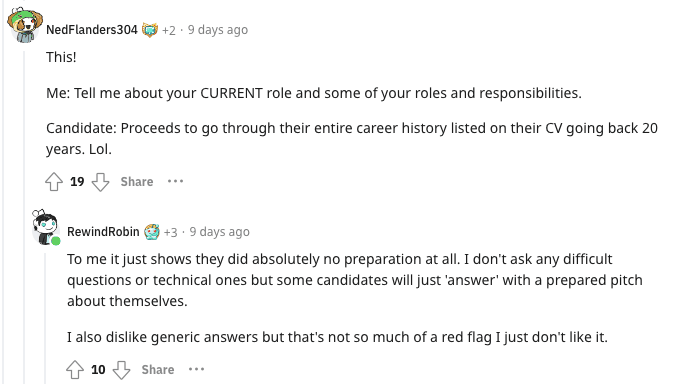
3. Being the it-was-never-my-fault person

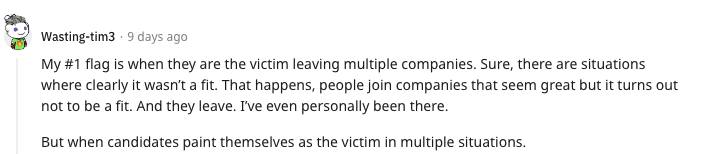
4. Playing the victim card everywhere
5. Having the audacity to show up without any research
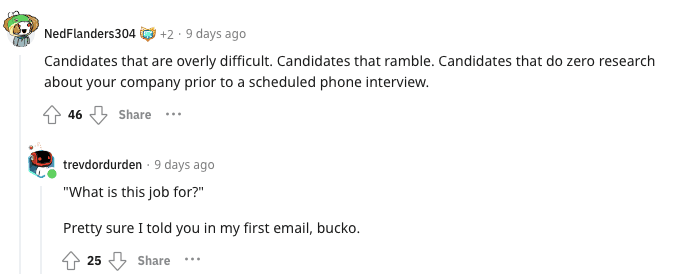
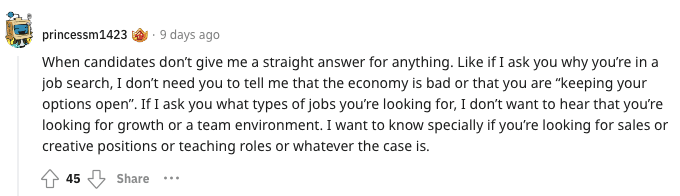
6. Not giving a straightforward answer
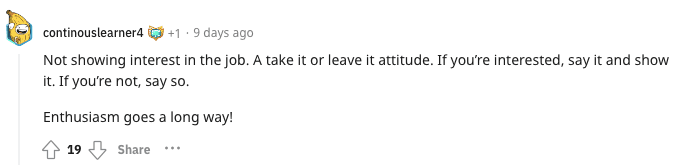
7. Showing an “I don’t care” attitude
8. When they can’t stop appreciating themselves

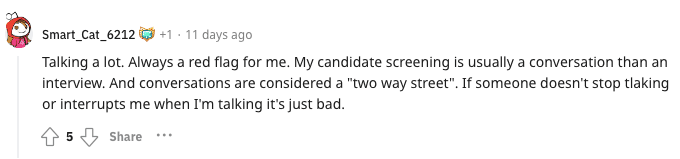
9. Demonstrating zero listening skills
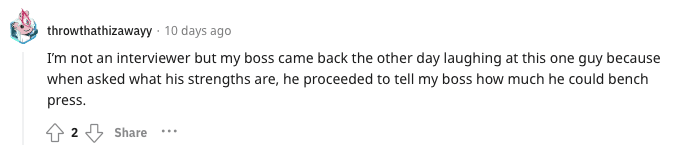
10. Talking about irrelevant skills
Frequently asked questions
1. How can recruiters identify when a candidate is not being truthful in an interview?
Identifying dishonesty in an interview can be challenging, but there are signs to watch for. Look for inconsistencies in a candidate’s responses, such as changes in their story or hesitation when answering specific questions.Pay attention to vague or overly general answers that lack details or specifics. Asking follow-up questions and probing deeper into their experiences can help expose inconsistencies or evasiveness.
Additionally, candidates who struggle to provide concrete examples or demonstrate their skills in detail might be masking the truth.
2. How do you maintain objectivity when a candidate has red flags but strong qualifications?
Balancing red flags with qualifications can be tricky, but it's important to stay objective by using structured interview processes. Focus on the role requirements and core competencies.When a candidate exhibits red flags, evaluate how these behaviors might impact their job performance in the context of the specific role. Use objective criteria to assess whether they have the skills, experience, and attitude to succeed despite their behavior in the interview.
It’s also helpful to involve multiple interviewers or colleagues to provide a more balanced and impartial perspective.
3. How can recruiters improve their interview process to avoid missing red flags?
To improve the interview process, recruiters should prioritize active listening and remain engaged throughout. Take time to ask open-ended questions that encourage candidates to speak freely and provide insights into their experiences and behavior.Structured behavioral interview techniques can help uncover potential red flags by asking candidates to give examples of past actions that demonstrate their ability to handle challenges.
Additionally, recruiters should reflect on their interviewing skills and seek regular feedback from colleagues or candidates to refine the process and ensure they identify key issues early.
Blog summary
The blog highlights common interview red flags shared by recruiters on Reddit, including oversharing unnecessary information, blaming others for past mistakes, and displaying a victim mentality.Other red flags include a lack of research, failure to provide straightforward answers, and an “I don’t care” attitude.
Additionally, excessive self-praise, poor listening skills, and talking about irrelevant skills can turn off recruiters and damage a candidate’s chances.
The blog provides examples of red flags and also includes humorous references to recruiters’ worst experiences.



Blog written by
Kaushal Chandratre
Content writer at Recruit CRM
Kaushal Chandratre is a content writer at Recruit CRM, where he writes content designed to make recruiters’ lives easier. He focuses on simplifying complex hiring processes and sharing practical strategies that recruiters can apply in their day-to-day work.
Stay ahead with the smartest
recruitment newsletter out there!
Join the recruiters who never miss what’s next.












 marketing@recruitcrm.io
%201.4700f78c.svg&w=32&q=75) Workforce Cloud Tech, Inc. 28 Mohawk Avenue, Norwood, NJ 07648.
Workforce Cloud Tech, Inc. 28 Mohawk Avenue, Norwood, NJ 07648.


